
Sources for Previous Residents of Selma Addresses
A Selma address has different source strengths in different eras. A deed names a transfer party. A directory lists a person at publication time. A census places a household on a census date. A Sanborn map tests whether a structure existed. A permit can date work. A newspaper or probate file can explain a move, death, or estate. The previous residents table keeps those layers in order.
| Source | Years it covers | Where held | What it shows |
|---|---|---|---|
| Recorded deeds and instruments | Electronic 1981-present; earlier manual index 1856-1980 | Fresno County Recorder | Owners, transfers, parties, legal descriptions |
| Polk county directories | 1907-1957, with gaps | Fresno library genealogy room | Name, address, occupation, household lead |
| Selma-Kingsburg-Fowler books | Selected years, 1962-1991 | Fresno library genealogy room | Local name and address listings |
| Haines criss-cross | From 1973 | Fresno library genealogy room | Address-to-listed occupant or phone clue |
| Sanborn maps | 1888, 1891, 1901, 1907, 1913, 1923, corrected to 1942 | Library and Library of Congress | Footprint, use, stories, blocks, street context |
| Census and Great Registers | Census through 1950; Great Registers 1867-1944 | Library, NARA, databases | Dated household or voter-era name lead |
| Enterprise newspapers | 1891-1912; 1939-present title history | Library and newspaper holdings | Obituaries, notices, moves, community ties |
The previous residents of a property are reconstructed by comparing these rows. No single source supplies every owner and occupant.
Selma Deed Records for Past Owners
A chain of title is the sequence of recorded transfers tied to the same land. A grantor transfers an interest. A grantee receives it. The legal description, not just a street number, keeps the chain connected when an APN changes or a street name shifts. The Fresno Assessor can supply a current parcel or assessment lead through a permitted route, while the Recorder’s index supplies the instrument trail.
- Obtain a known APN, current owner clue, legal description, or parcel map, and write down the reference date.
- Search the Fresno Recorder’s electronic index by last name and first name, document date, number, type, and APN when present.
- Open or order the acquisition deed, record the grantor, grantee, document number, date, book and page, and full legal description.
- Search the earlier grantor as a prior grantee, using the legal description and recorded map to test continuity.
- Pair each ownership interval with a directory, census, newspaper, permit, probate, or obituary clue, keeping owner and occupant in separate columns.
The Fresno Official Records Search and Copies portal covers the electronic index from January 1, 1981 to the present. Copies can be ordered online, by mail, or at the Recorder counter. The office is at 1250 Van Ness Avenue, Fresno, with property help at 559-600-3471.
- Grantor and grantee
- The transferring party and receiving party in a recorded instrument. Neither label alone proves current residence.
- Chain of title
- A connected series of ownership transfers for the same land, checked through legal descriptions and maps.
- Legal description
- Lot, block, subdivision, or metes-and-bounds language that can preserve land identity when an address changes.
- APN
- Fresno County’s parcel identifier. It can change after a split, merge, survey, or map renumbering.
Past Residents of Selma Need a Layer
Previous residents are not the same as previous owners. The Haines criss-cross books, telephone books, Polk directories, and Selma-Kingsburg-Fowler volumes can place listed people at an address. Census schedules can show a household at a ten-year point through 1950. Newspapers can connect a name to an obituary, announcement, church, club, or business. These sources can include renters or other occupants that a deed never names.
Use a paired timeline:
- Place the deed transfer or parcel interval on a line with its exact recording date.
- Insert the nearest available directory edition and record its publication year, name form, and address.
- Compare the matching census year and note household members without treating the census date as a full decade.
- Search Enterprise notices, yearbooks, Great Registers, probate, or cemetery leads for a reason a name appears or disappears.
The Selma city directory book holds the collection details and year runs. This previous residents trail uses those volumes to follow one address, not to rebuild the whole shelf.
House-history rule. Keep owner, occupant, mailing address, business contact, voter status, and past resident as different evidence fields. A name in one row should not silently fill the others.
Selma Recorder Records Across 1981
Older previous residents require manual index work. For 1972-1980, the Fresno Recorder provides combined Grantor-Grantee scanned indexes. For 1914-1971, separate scanned Grantee and Grantor paper books are available. For 1856-1913, select the year range and grantor or grantee in the deed index, then read the page images by hand. These legacy pages do not have full-text search.
Record the surname letter, year, book, page, document number, document type, and party role. A mail or counter copy request should include one indexed party and, before 1981, book, page, and year. The Recorder’s published copy fees are $1.50 for the first page, $0.50 for each additional page, and $1 for certification. A counter card payment adds $2.50. Certified copies are mailed because they require a live signature and seal.
The county’s free Property Owner’s Protection Alert is a forward-looking notice. It can email a future indexed grantor or grantee match, but it does not reconstruct past residents, stop a recording, catch every APN, or replace a chain search.
Seven Selma Sanborn Views for Past Residents
Sanborn maps provide a structure check for previous residents research. The Selma run includes 1888, 1891, 1901, 1907, 1913, 1923, and a corrected 1923-1942 edition. Footprints, building material, stories, use, street widths, boundaries, and house or block numbers can show whether a structure stood near the date of a directory or deed clue. They do not list every person who lived inside.
The 1888 and 1891 maps are free Library of Congress color scans. Later maps are available through library microfilm. The corrected edition should be read as layered evidence with paste-ons and corrections, not one date. Compare the street alias, block, legal description, parcel map, and footprint before joining it to a current address.
The digitized 1891 Selma Sanborn map is a useful early anchor:
Use it beside the local Selma Sanborn holdings page to distinguish free scans from later microfilm.
Selma Street Alias Records: Nebraska and 2nd
Previous residents can disappear when an old address uses a different street label. Nebraska Avenue also appears as 2nd Avenue in Selma planning material. Search both forms, then test the block, cross street, parcel shape, and legal description. South Golden State Boulevard and old 99 create another corridor alias that can affect newspaper, map, and directory searches.
The railroad diagonally bisected the original 40-acre townsite. Small parcels near the track and larger farm parcels at the edge later became subdivisions. A street number alone may not preserve that history. The map and deed should be treated as the continuity bridge before a name is assigned to the wrong house.
Selma Permit Records Date Past Households
Selma Building and Planning records can add construction and alteration dates to a house history. Building reviews plans, issues building, electrical, mechanical, and plumbing permits, inspects construction, and handles unsafe or dilapidated structures and abatement. Planning records can involve parcel and tract maps, annexations, site review, conditional-use permits, variances, and project applicants.
The Selma Building page lists the counter, 559-891-2208, weekday hours from 8:00 a.m. to 5:00 p.m., and the OpenGov starting point. The research did not verify a public historical permit index with complete fields or coverage. Ask City Hall for a defined address or APN, date range, application, issuance, final, and correction records.
An applicant, architect, contractor, or owner name is a project clue. It is not an occupancy finding. Use a directory, census, or newspaper source for the household layer.
Selma Property Alerts Are Not Previous Residents
The Fresno Recorder’s Property Owner’s Protection Alert helps a subscriber learn when a future indexed document matches a name. It can show a document number, recording date, type, and indexed grantor or grantee. The alert does not stop a recording, guarantee every name or APN was indexed, or provide title insurance. It is a notification tool, not a backward house history.
The official property-alert page gives the right limits:
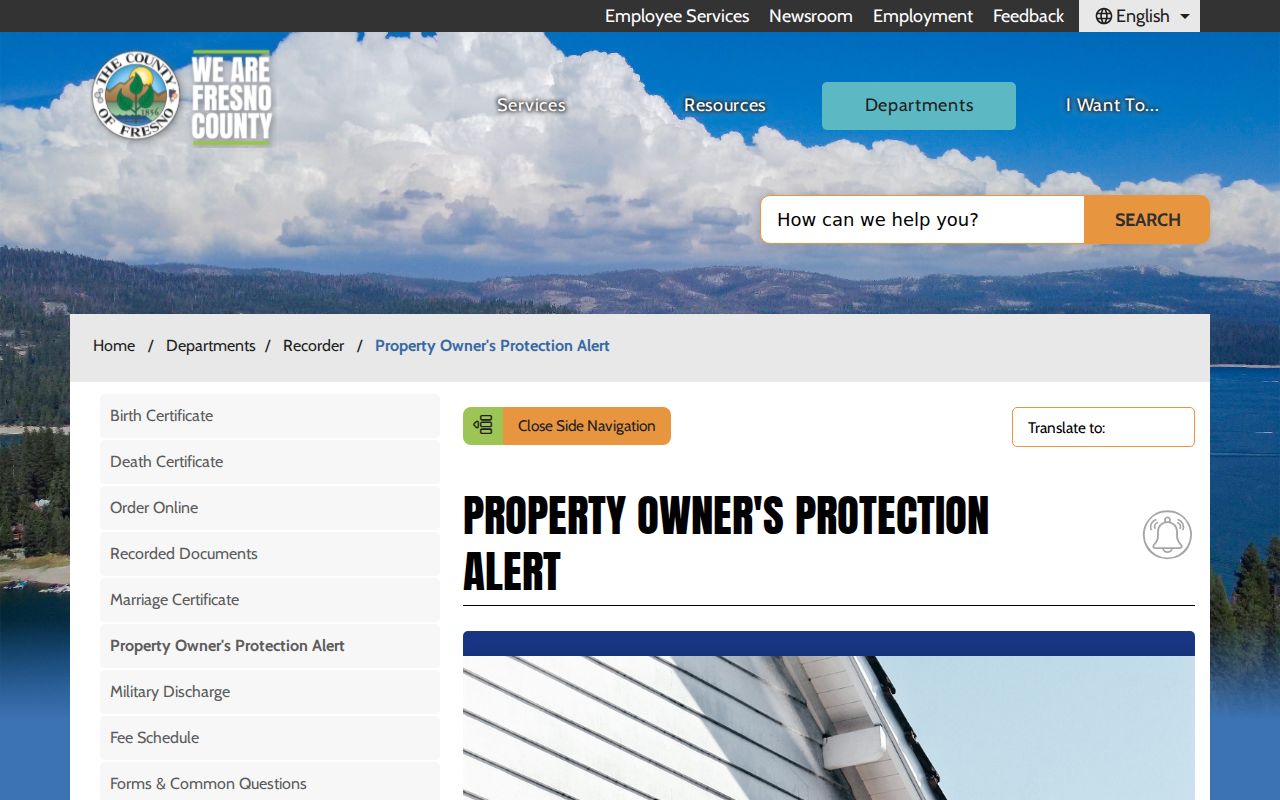
The alert view belongs at the current end of a chain. The earlier names still require the Recorder’s index, copy workflow, and legal-description check.
Selma Probate Trails for Previous Residents
When a previous resident died, the trail may move from a directory to the Selma Enterprise, Fresno probate, a cemetery index, or a final deed. Public probate petitions and notices can name a representative, heir lead, or estate address. Those details may be historical and should be confirmed with a second source. Ordinary vital-copy access still depends on California eligibility, and confidential adoption records remain restricted.
Fresno Court Archives at 1963 E Street can be a fallback when a case or file is not fully available online. It covers civil, criminal, family, family support, juvenile dependency, probate, small claims, traffic, and appellate files. Hours are Monday through Thursday 8:00 a.m. to 3:00 p.m. and Friday 8:00 a.m. to noon, with picture ID required to receive a folder. If a related matter reached federal court, PACER is the federal docket route and should be read separately from Fresno’s state-court records.
The Fresno court Archives information is useful for planning that in-person step:
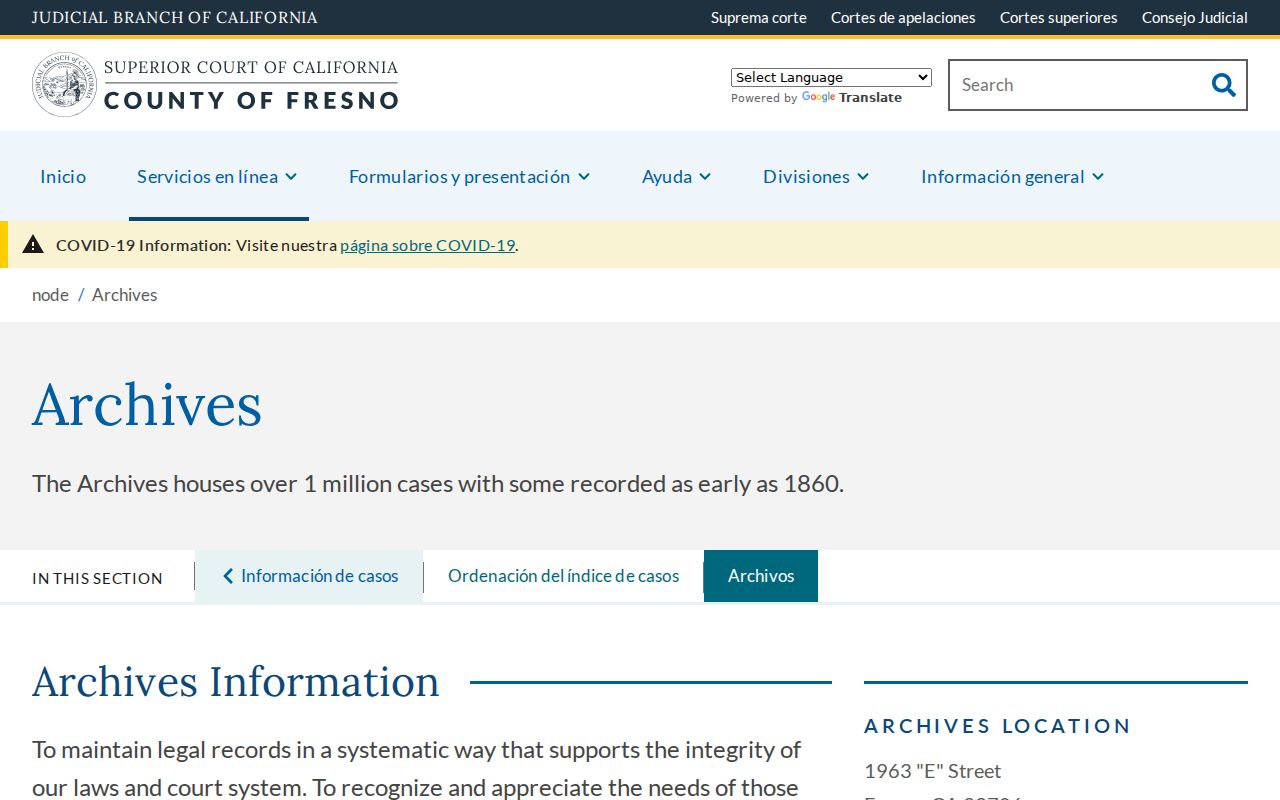
Archives can supply a public filing or register-of-actions lead, but sealed, juvenile, adoption, and confidential family or probate material remains outside an open name search.
Selma Previous Residents Need a Date
A previous residents conclusion should name its date, source, and role. “Listed in a 1977 directory” is narrower than “lived in the house.” “Grantee on a 1965 deed” is narrower than “resident.” “Household member in a census” is narrower than “owner.” This language protects the research from a clean story that the records do not support.
Lawful house history, family research, and personal curiosity are valid reasons to compare public sources. Keep private details out of notes when they do not serve the research question. Do not use a past address or name trail to stalk, harass, intimidate, or expose a living person. A commercial people-finder profile is not a substitute for a custodian record and can merge owners, occupants, and former residents.
For the current end of the address trail, use the Selma street directory. For exact library volume years, use the city directory book. The previous residents method works when each source remains in its lane and every transition is anchored to a date.