
How Selma Residents Come Into View
A Selma residents directory search works best when the first record matches the question. The Fresno County Assessor can connect an assessment record to a parcel, but the county warns that open address-to-APN matching ended on January 1, 2025. The Recorder follows indexed parties and recorded instruments. California My Voter Status confirms a person’s own registration after identity matching, not a browseable street roster. Fresno Superior Court indexes parties and case status, while vital-record custodians separate informational copies from authorized certified copies.
Historical work takes a different route. The Genealogy & Local History Library holds Polk county directories, selected Selma, Kingsburg, and Fowler books, Haines criss-cross volumes, newspapers, yearbooks, maps, and Great Registers. A present owner, a listed occupant, a registered voter, and a directory entry can all be different people. Treat each as a dated clue, not a single proof of residence.
For a focused start, move from the broadest useful key to the narrowest record:
- Write down the full name, middle initial, former address, spouse, another personal clue, or known APN already in hand.
- Use the county property and deed sources for parcel, owner, mailing, transfer, and legal-description leads.
- Use California status, court, vital, business, or professional-license sources only for the question each one can answer.
- Use the library shelf, newspaper, yearbook, or Great Register when the search crosses into Selma history.
- Ask Selma City Hall or the record custodian for a specific nonexempt item when a portal stops short.
Note: A negative search can reflect a spelling, coverage, confidentiality, or digitization gap rather than a person who never lived in Selma.
Selma's Public Records Desks
Selma’s records trail is split between City Hall and Fresno County offices in Fresno. The Selma City Clerk contact and records page accepts a California Public Records Act request through a web form, an email to cityclerk@cityofselma.com, or mail to 1710 Tucker Street, Selma, CA 93662. City Hall lists weekday hours from 8:00 a.m. to 5:00 p.m. and the main number 559-891-2200. A precise request can name an address, APN, permit, license, code matter, meeting body, or date range.
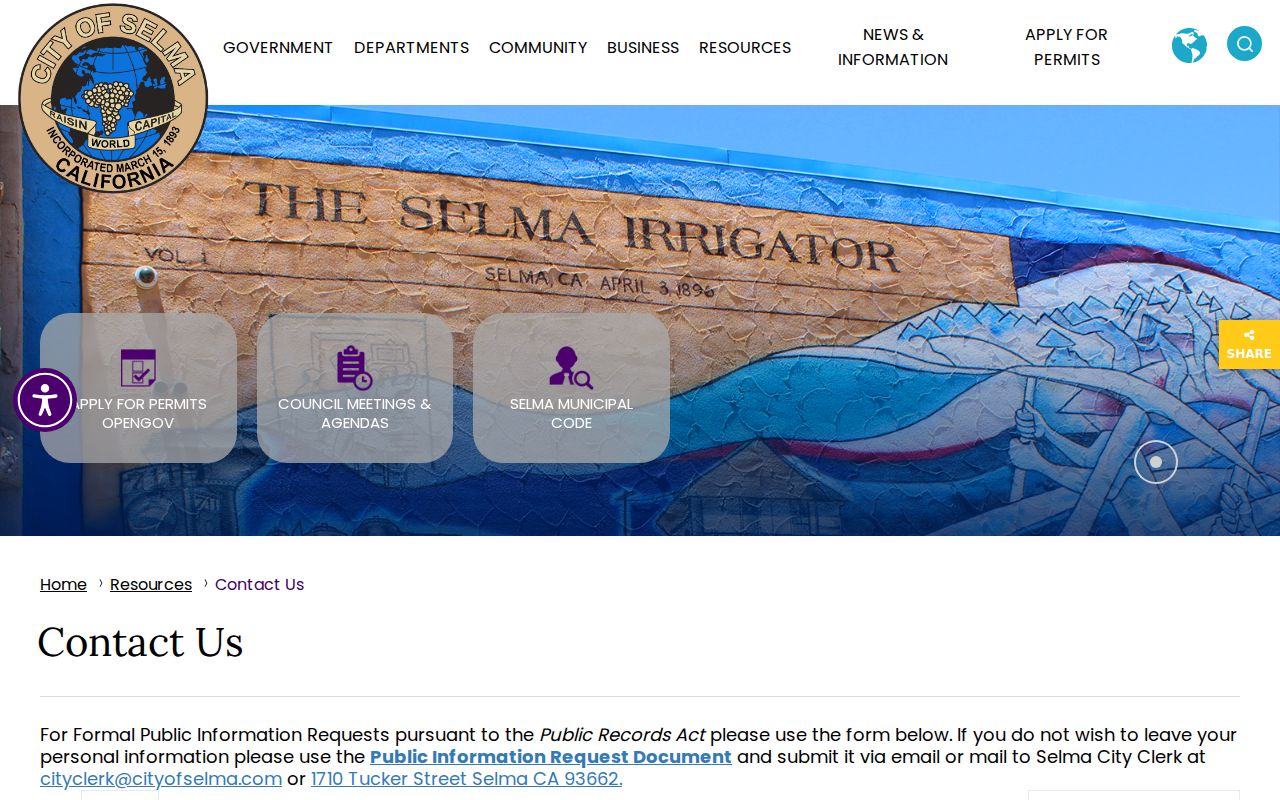
The city contact view confirms the request route and staff-directory role without turning a municipal employee list into a general Selma resident list.
County records answer different questions. The Fresno Recorder holds deeds, liens, maps, public marriage certificates, and other recorded instruments. The Assessor holds assessment and roll products. The court keeps case records, and the state supplies identity-gated or professional sources. Each office has its own access rule, so the Selma residents directory is best treated as a map of custodians.
Selma City Clerk
1710 Tucker Street
Selma, CA 93662
559-891-2200
CPRA requests and staff directory
Fresno County Recorder
1250 Van Ness Avenue
Fresno, CA 93721
Property line 559-600-3471
Fresno County Assessor
Hall of Records, 2281 Tulare Street, Room 201
Fresno, CA 93721
559-600-3534
Assessor services and roll products
California Voter Status
Identity-gated personal lookup
Not a public resident list
Use the state portal
My Voter Status
Selma City Hall's Records Request Route
City records may contain an applicant, owner, contractor, representative, or business contact without proving who occupies a property. Community Development brings Building, Planning, and Economic Development together. Planning records can involve General Plan amendments, zone changes, conditional-use permits, variances, parcel and tract maps, annexations, site plans, home-occupation permits, signs, and landscape reviews. The Planning Department publishes 559-891-2209 and a virtual counter. Building handles construction permits, inspections, unsafe structures, and abatement.
The Selma OpenGov application shell can submit, track, and manage permits, planning matters, and business licenses, but the research did not verify an unauthenticated historical search with stable result fields or coverage dates. Use the web form or the counter when a record needs a date range, parcel, or address match. Police reports have a separate route at 2055 Third Street, 559-891-2231, and release eligibility depends on the requester’s role in the incident.
Selma business-license inquiries ask for a name, business name, email, and nature of inquiry. The Selma business-license information explains the local requirement. An optional phone, address, attachment, and confirmation email can be added. The contractor form asks for business and mailing details, owner contact, entity type, contractor number, expiration, classification, work description, workers’ compensation, and signature. A license ties a person or entity to local activity. It does not turn into a residents directory entry or establish a home address.
Selma Assessor Records After 2025
The Assessor is the main property lead for a Selma address, but its current limits matter. Effective January 1, 2025, the county stopped providing open address-to-APN and APN-to-address matching online. Owner-name search is not an unrestricted public web mode. A researcher may need a known APN, a legal description, a parcel map, a counter visit, a purchased roll, or a precise records request. The county’s mapping guidance explains how APNs relate to deeds, plats, and parcel maps.
The former embedded lookup design still documents the fields a researcher may encounter when working from a known parcel or asking for help: APN book, APN page, APN block or parcel, street number, direction, street name, and a city choice such as Selma. Those visible fields should not be presented as a promise of a live result. The county’s notice controls. The map is a practical bridge when the reverse-address route is closed.
The Fresno County Assessor service page is the official starting point for current notices and roll products:
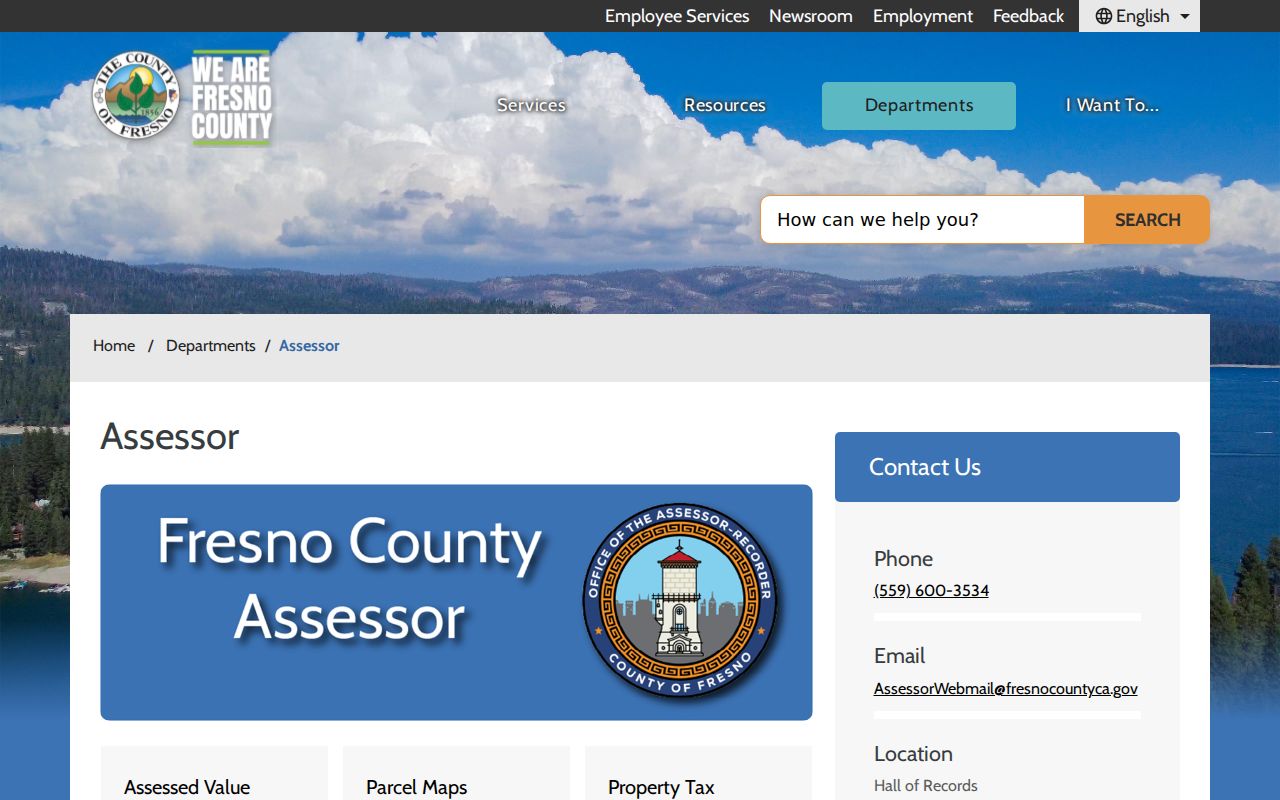
The service view reinforces the need to use a known APN, map, counter, or purchased product when a reverse address match is unavailable.
| Field or key | What it means in Selma work |
|---|---|
| APN book, page, block or parcel | County parcel key; APNs can change after a split, merge, survey, or map renumbering. |
| Street number, direction, street name, city | Visible legacy address fields, not a current open reverse-address guarantee. |
| Assessee and mailing address | Assessment responsibility and tax-mail destination; mailing can differ from the property situs. |
| Land, improvement, and tax-year values | Assessment facts, not a direct finding about who sleeps at the address. |
Note: Fresno will not sell only a Selma slice of the assessment file, so whole-county roll products and filtering may be required.
Present-Day Selma Resident Sources
Current records that resemble a Selma residents directory have different meanings. A recorded deed names parties to an instrument. An assessment roll identifies the assessee and may provide a mailing address through a permitted channel. A voter status result belongs to the person who completes the identity check. A staff directory lists public employees acting in official roles. Business and license records show an entity, agent, licensee, or professional contact. None should be silently combined into a list of everyone who lives in a ZIP code or on a street.
| Source | Person or address clue | Custodian | Access path |
|---|---|---|---|
| Assessment and roll products | Assessee, situs or mailing lead, value | Fresno County Assessor | Value page, counter, or purchased roll |
| Official records index | Grantor, grantee, date, document, legal description | Fresno County Recorder | Online index, counter, mail, paid copies |
| California voter status | One person’s registration status | Secretary of State | Identity-gated self-lookup |
| City staff directory | Official name, role, email, phone | Selma City Clerk | Free city contact page |
| Business and license files | Entity, agent, license status, business address | California SOS, DCA, Fresno Clerk, Selma | Search portals and agency requests |
When the question is about one person, the Selma resident lookup approach starts with the strongest known fact and confirms it with an independent custodian. When the question is a whole street, the address method belongs in the Selma street directory workflow. That division prevents a business filing or owner mailing address from being mistaken for occupancy.
Selma Voter Records Are Personal
California My Voter Status is a self-lookup that asks the person to match identity details. It is useful for checking one’s own registration, not for browsing a Selma block. Elections Code §2194 limits voter-file access to approved election, scholarly, journalistic, political, or governmental purposes. The statewide application requires an applicant or organization, data purpose, geography, security promises, breach cooperation, and a penalty-of-perjury signature. Personal, private, commercial, solicitation, or harassment uses do not qualify.
An approved file may contain registration county, name, residence or mailing information where present, status, registration date, party, language, precinct, districts, and participation history. It excludes signatures, driver-license or state-ID data, the last four Social Security number digits, unique identifiers, confidential voters, and preregistered minors. Participation shows that a ballot was cast or credited in an election. It never reveals ballot choices.
The state voter-file request information is the correct channel for an eligible purpose. California’s Safe at Home program lets eligible participants register with a confidential route. A status result is one dated evidence point, not a complete resident directory and not proof of current physical presence.
The California My Voter Status form shows the personal nature of the lookup:
The identity gate is part of the access rule, not a missing public search feature.
Selma Recorder Records Before 1981
The Fresno Recorder’s official-record portal covers an electronic searchable index from January 1, 1981 to the present. Older Selma research is manual. Scanned grantor and grantee deed indexes cover 1856 to 1913. Separate grantor and grantee paper-book indexes cover 1914 to 1971. Combined grantor-grantee scans cover 1972 through 1980. The old pages do not offer full-text search, so a researcher selects a year band and surname letter, records the book, page, and year, then requests the instrument.
Modern searches can use party name, recording date, document number, document type, and APN when one appears. The county recommends Last name, First name for the strongest result. Online searches can lead to a cart and download workflow. In-office users can search at the Eagle Recording Kiosk. Copies are available online, by mail, or at the counter. The published copy schedule is $1.50 for the first page, $0.50 for each added page, and $1 for certification. A card at the counter adds $2.50. Certified copies are mailed because they need a live signature and seal.
The Recorder does not keep one comprehensive property file for an address. A deed, lien, reconveyance, map, or judgment is its own instrument, indexed by party. Start with an acquisition deed, identify the grantor, then search that person or entity as an earlier grantee. The Fresno Official Records Search and Copies portal is the online doorway, while the 1250 Van Ness Avenue counter, mail request, and phone lines remain useful fallback channels.
Selma's Historical Directory Shelf
The Fresno County Public Library’s Selma Branch at 2200 Selma Street has the system’s second-largest local-history collection, but remodeling has shifted access. A Tuesday 11:30 a.m. to 1:00 p.m. pop-up operates in the Selma Police Headquarters Community Room at 2055 Third Street. Serious directory work belongs at the Genealogy & Local History Library, 5769 N. First Street, Fresno. Its hours are Tuesday 10:00 a.m. to 5:00 p.m., Wednesday noon to 7:00 p.m., Thursday and Friday 10:00 a.m. to 5:00 p.m., and Saturday 10:00 a.m. to 2:00 p.m.; appointments are available.
The collection includes directories, newspapers, yearbooks, maps, photographs, oral histories, census material, Great Registers, county vital indexes, and cemetery leads. The named Selma, Kingsburg, and Fowler directory run is intermittent from 1962 through 1991. Countywide Polk coverage runs broadly from 1907 through 1957, and Haines criss-cross coverage begins in 1973. The Genealogy and Local History collection hub is the right starting point before a trip.
Note: The library’s temporary Selma access matters because microform reader and copying equipment are part of the historical search path.
The Selma residents directory trail also has a local story. A WCTU-backed reading room opened in 1888, a Carnegie building followed in 1905, and the library became a county branch in August 1913. That institutional chain helps explain why a small agricultural and railroad town now has a deep research shelf rather than one current directory.
The following directory-history record is useful for understanding publisher changes before choosing a volume. The collection image comes from the Genealogy and Local History collection hub:
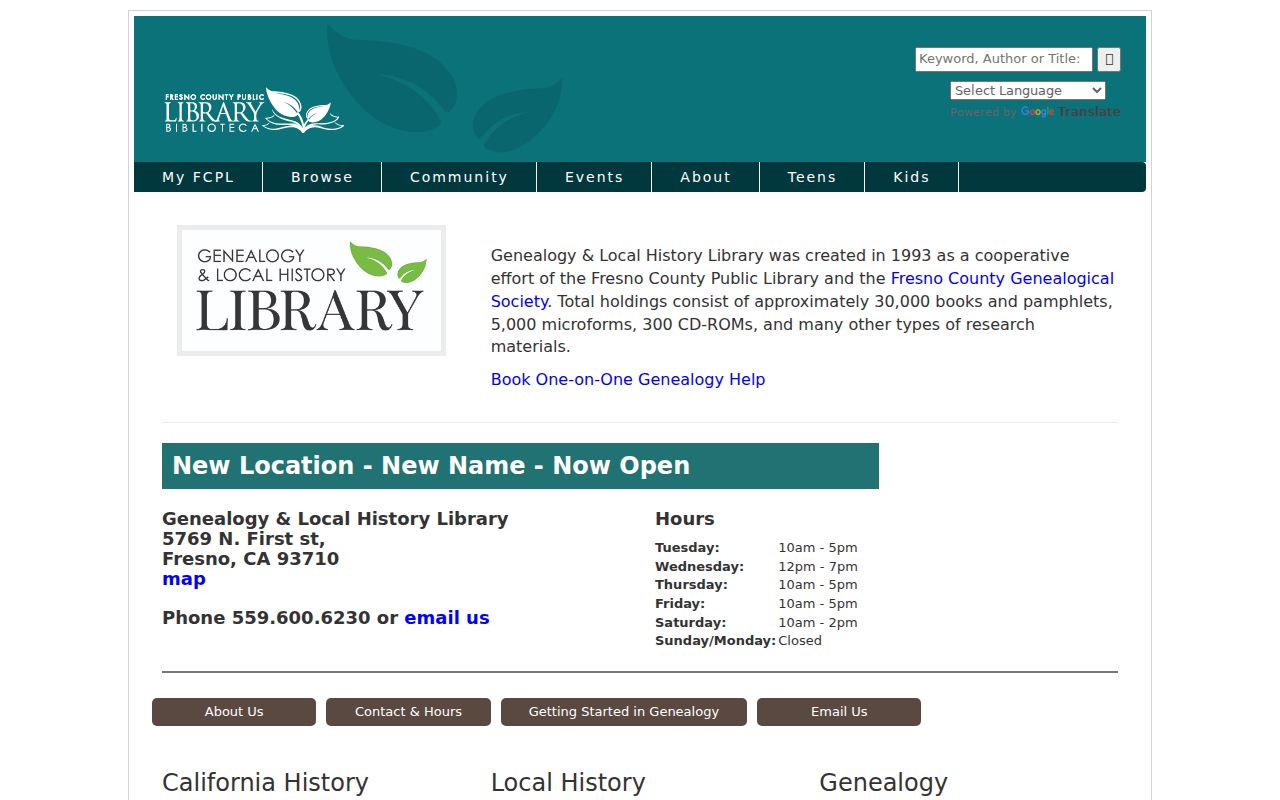
The collection view points to the place where old names, addresses, and occupation notes can be checked against the original shelf rather than a thin web summary.
Selma Directory Records Speak in Keys
A few terms keep the Selma residents directory work clear. A roll is a dated list maintained for a defined purpose, such as assessment or registration. An index points to an instrument or case; it is not the same as the document image. A parcel is a county tax unit, while a situs address is the physical location of the property. A criss-cross directory reverses the usual name-first order so an address, street, or phone lead can point toward a listed occupant.
- Roll
- A purpose-bound list. An assessment roll records tax facts, not every person at a property.
- Index
- A finding aid for a deed, case, or filing. The source image and certified copy are separate products.
- Parcel
- A mapped county property unit identified by an APN that can change after a split or merge.
- Situs and mailing address
- Situs is where land sits. Mailing is where notices go. They can describe different places.
- Criss-cross directory
- An address-oriented directory used to move from street or phone information toward a named listing.
These definitions prevent a common error. A current owner may receive tax mail somewhere else. A directory entry may omit renters or list only one adult. A court index may use a name that belongs to another person. A parcel map can show adjacency without revealing a household. Each clue needs its own date, role, and source URL.
Selma Lookup Names Need Two Anchors
Same-name records are common in a city with multilingual households, compound surnames, initials, and records created in different eras. Preserve the exact spelling used by each custodian. Try spaced, hyphenated, concatenated, and shortened forms. A former address, APN, spouse, age band, personal clue, business entity, case number, or license number can separate two people. Do not assume ethnicity, family ties, citizenship, or identity from a name.
One useful pattern is name to role to date to second custodian. A business filing can identify an agent, then a deed or directory can test whether that person has a Selma connection. A court party can be checked against a known address or case date. A directory student can be compared with a later newspaper notice or professional license. An unclaimed-property result is a lead, not a current address. The California ClaimIt search is free and official, but a claim requires identity proof.
The California Secretary of State business-entity search can supply an official filing anchor:
Entity numbers, filing dates, and agent roles help separate names without turning a business record into a home address.
The California DCA license search adds a different kind of public role:
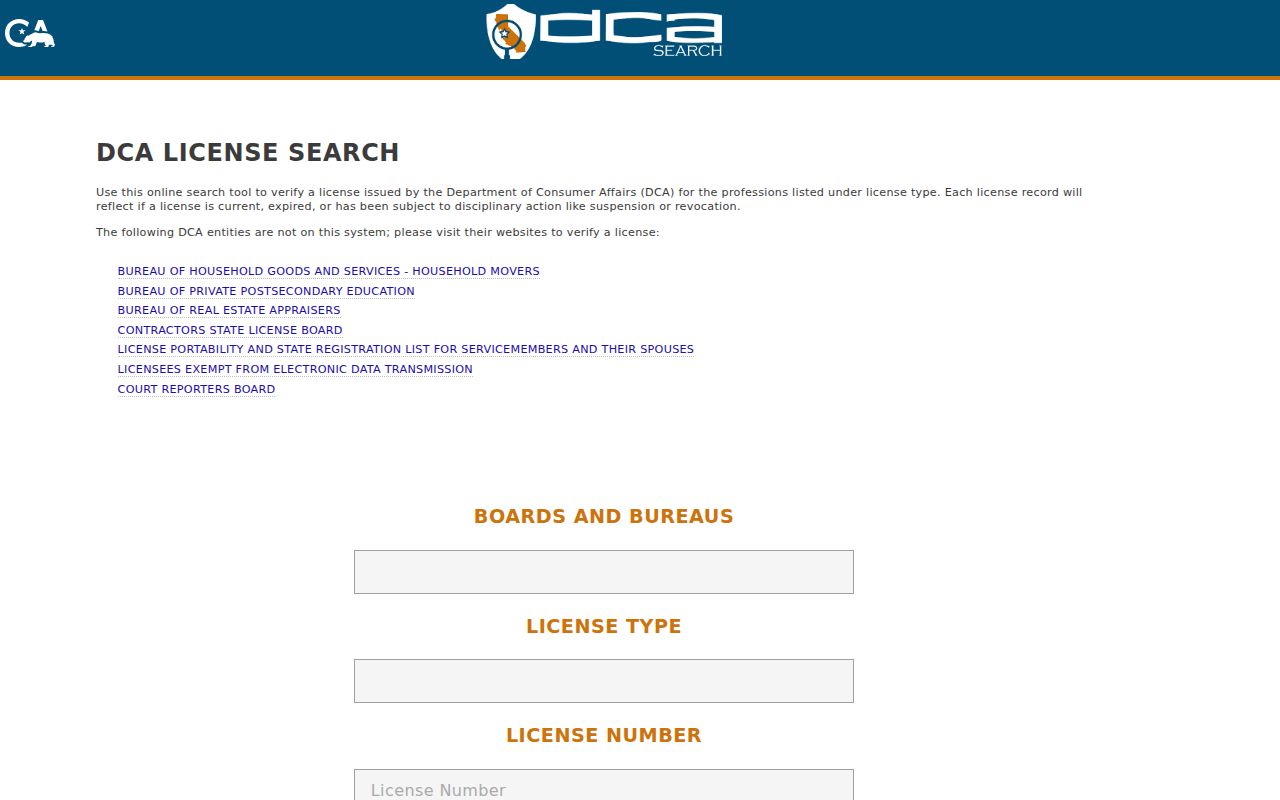
License status and public discipline fields should remain distinct from property, court, and directory evidence.
The California unclaimed-property search is another free lead:
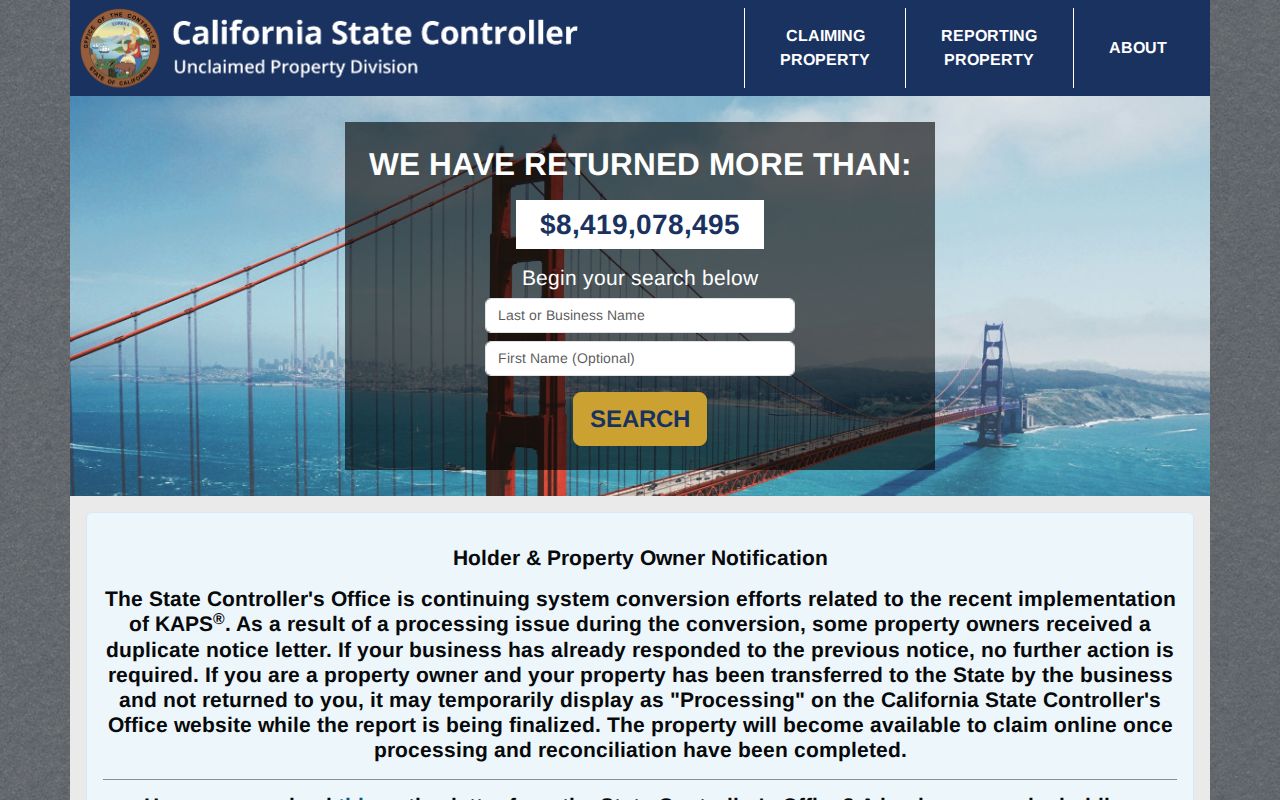
A claim still requires identity proof, and an unclaimed-property record is not a current address result.
Use the record for its stated purpose. Selma records support personal history, family research, civic review, and scam avoidance. Do not use a name or address trail to stalk, harass, intimidate, or expose a protected person.
Commercial people-finder products may combine public, licensed, and inferred data. They can be stale, costly, or merge two people. They are not a substitute for a certified copy, a custodian’s correction process, or a carefully dated library source.
How Selma's Records Trail Changed
Selma’s history shapes the search. Settlement at Valley View dates to June 26, 1880, the post office to August 12, 1880, and incorporation to March 15, 1893. The railroad cut diagonally through the original 40-acre townsite. Early small lots near the track and larger farm parcels at the edge do not always line up with a modern block search. Old State Route 99 and South Golden State Boulevard, plus Nebraska Avenue and 2nd Avenue, create alternate names in the records.
The 1890 census was destroyed, but Great Registers, the 1891 Selma Enterprise run, and early Sanborn maps provide a substitute trail. Sanborn editions exist for 1888, 1891, 1901, 1907, 1913, 1923, and a corrected run through 1942. Local papers carry obituaries, announcements, legal notices, clubs, churches, and business changes. The agricultural and railroad setting also explains why resident clues sit across business filings, directories, property records, and local news.
The city’s present scale does not change the record rule. A resident directory cannot be inferred from population counts. A street, ZIP, city line, district, irrigation area, and parcel map can overlap without sharing the same boundary. Use the specific office, map, or collection that created the evidence.
The Selma records request page provides the public-facing route when an identifiable, nonexempt city record is not online. The California Public Records Act text gives an agency a ten-day disclosability determination window, with a possible extension of up to fourteen days for defined unusual circumstances. That is a decision window, not a production deadline.
Historical Selma Resident Directories
The historical side of a Selma residents directory begins with the countywide Polk-Husted and R.L. Polk runs. They cover most or all of Fresno County from 1907 through 1957, with gaps in several years. The named Selma, Kingsburg, and Fowler books appear in 1962, 1965, 1967, 1969, 1971, 1972, 1973, 1975, 1977, 1978, 1980, 1982, 1985, 1986, 1987, 1989, and 1991. Haines criss-cross volumes resume countywide address-oriented coverage in 1973.
Entries may show a name, spouse convention, occupation, address, and a cross-reference. A criss-cross page can reverse the path from a street or phone to a listed household. Compare adjacent editions because publication lag, initials, omitted renters, married-woman conventions, and abbreviations can make a person seem to vanish. The full collection story belongs in the Selma city directory book, while current address work belongs in the street directory lookup.
Printed directories are snapshots. They can establish that a name was listed at an address in an edition, not that every household member lived there for the whole year. Pair a directory with a deed, census, newspaper, yearbook, probate file, or another dated source. That is how the Selma residents directory becomes a careful record trail rather than a guessed roster.